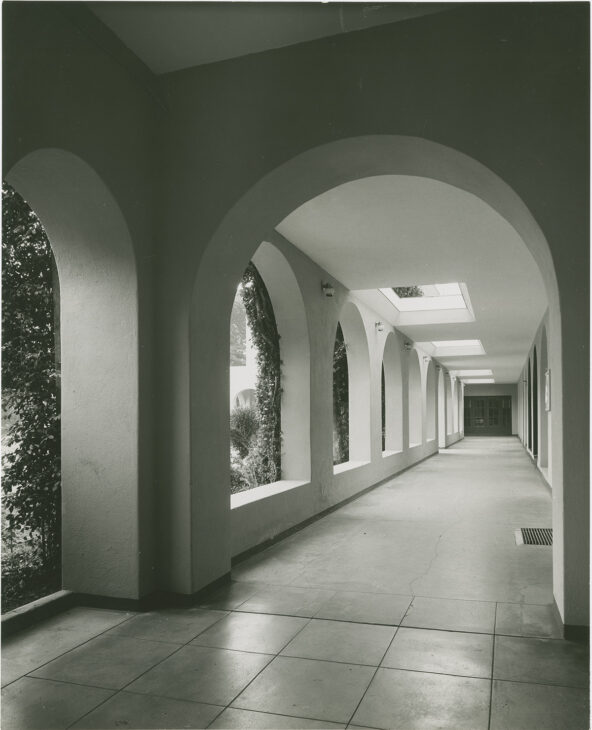
Irving J. Gill (1870–1936) created a distinctive architecture in Southern California, using a refined and abstracted architectural vocabulary which he described as “the straight line, the cube, the arch, and the circle.” This exhibition examines Gill’s architectural language and his experiments with materials and construction. The roots of his idealistic achievement are traced to the social concerns of the Progressive era and the Arts and Crafts movement, and the influence of Chicago architectLouis Sullivan (1856–1924), who argued for a “new architecture in America,” unaffected by the past and based on a transcendental view of nature.