Common Bonds:
Artists and Architects on Community
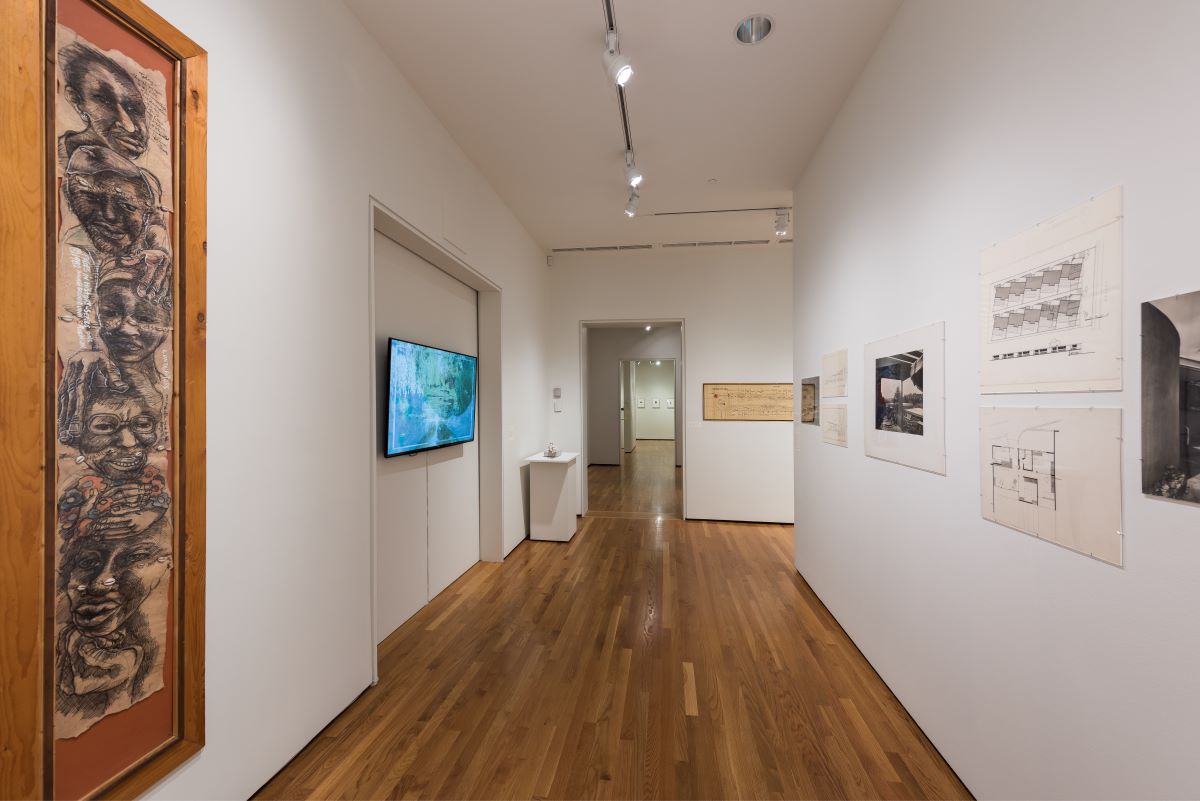
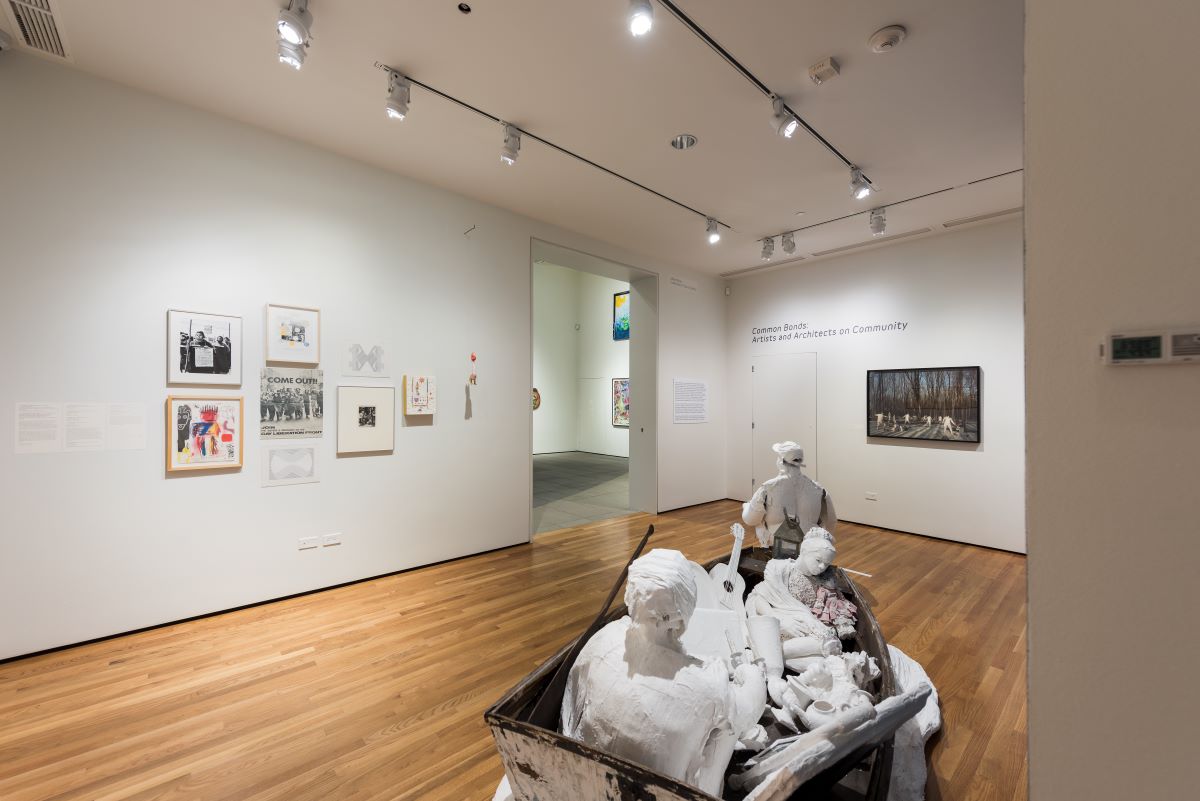
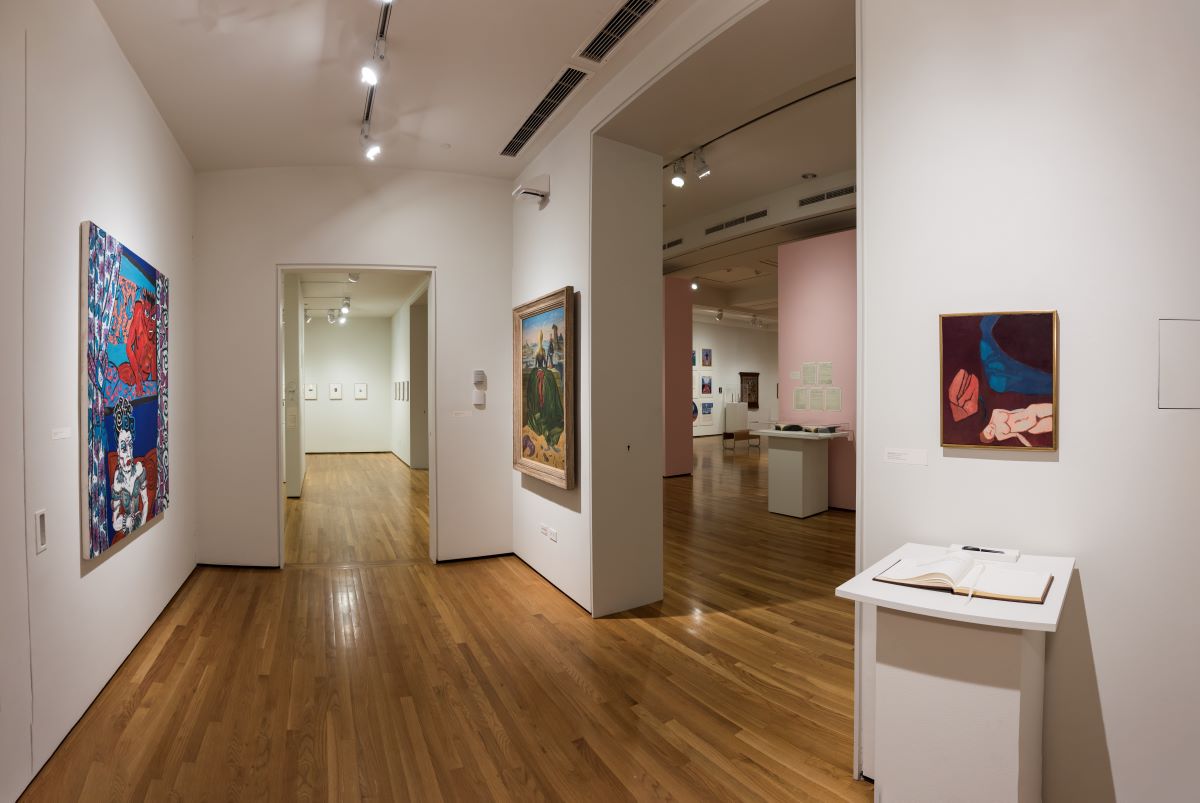
Common Bonds is a group exhibition that looks at how artists and architects approach the concept of community. Featuring book arts, drawings, photographs, prints, sculpture, and video, this exhibition examines modern and contemporary works that explore how fellowship and communion are engendered and portrayed. For many practitioners, this exploration consists of observations of specific social circles, ethnic groups, cultural traditions, neighborhoods, or protest movements. For others, especially architects, community is created through planned developments or proposals for public spaces. Common Bonds includes work by Gregory Ain, Roberto Benavidez, Guillermo Bert, Karon Davis, Fritz Eichenberg, Asad Faulwell, Ja'Tovia Gary, Pablo Helguera, James Hill, Peter Hujar, Joseph S. Melchione, Ruben Ochoa, Julius Shulman, Jean Swiggett, Pipo Ngyugen-Duy, Richard B. Taylor, and Kara Walker.
Originally opened on January 13, 2019.
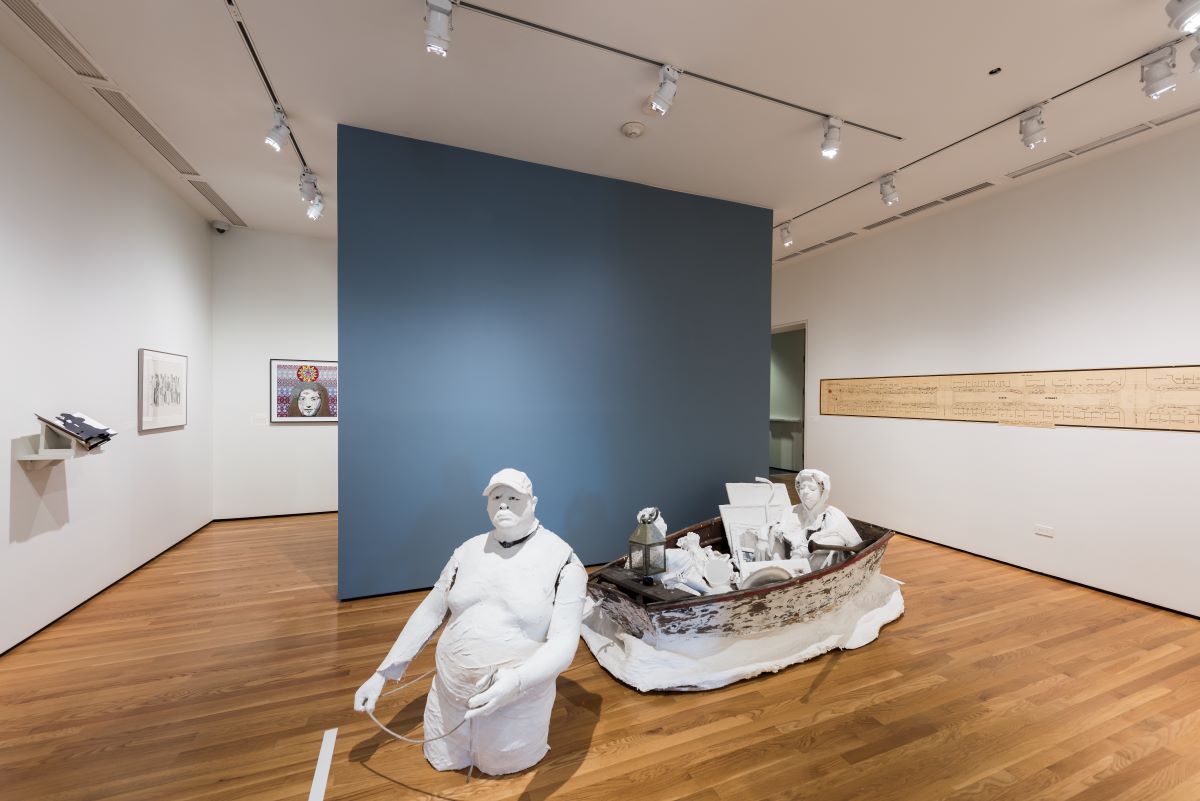
Kara Walker is an artist who explores race, violence, sexuality, and gender. Her works challenge viewers to confront stereotypes and discriminative ideals embedded in society. Freedom, A Fableis a pop-up book featuring black silhouettes of figures in a Civil War era narrative written by the artist. Although this book appears to be for children, it details the story of a female slave whose life after emancipation is anything but free, and who experiences both racism and sexism throughout the narrative. Freedom, a Fableis not only the title but the underpinning ethos of the book.—Morgan Owen (BA Art History& Global Studies 2019) Curatorial Intern Karon Davis is best known for her life-size plaster sculptures. This work is part of her series Muddy Water that was inspired by the artist’s evacuation during the 2017-18 Thomas Fire. This fire devastated areas throughout Santa Barbara and Ventura counties and forced many to abandon their homes. Noting the number of natural and man-made disasters, which have caused individuals around the world to become evacuees, Davis focused on how those disasters have impacted the Black community in particular. To address that idea, each work within the series is made to look as though the surrounding area has been flooded. As she states: “I started thinking about black bodies being affected by brown water, displaced by brown water, our relationship with water and what’s been going on recently in Compton [where the local agency has delivered dirty water to residents for years]. Muddy waters caused by natural disasters or manmade systems that fail us, whether it’s the levees, the sanitation system or the governmentthat’s supposed to provide clean water to everyone. That is our natural right.” —Morgan Owen (BA Art History& Global Studies 2019) Curatorial Intern
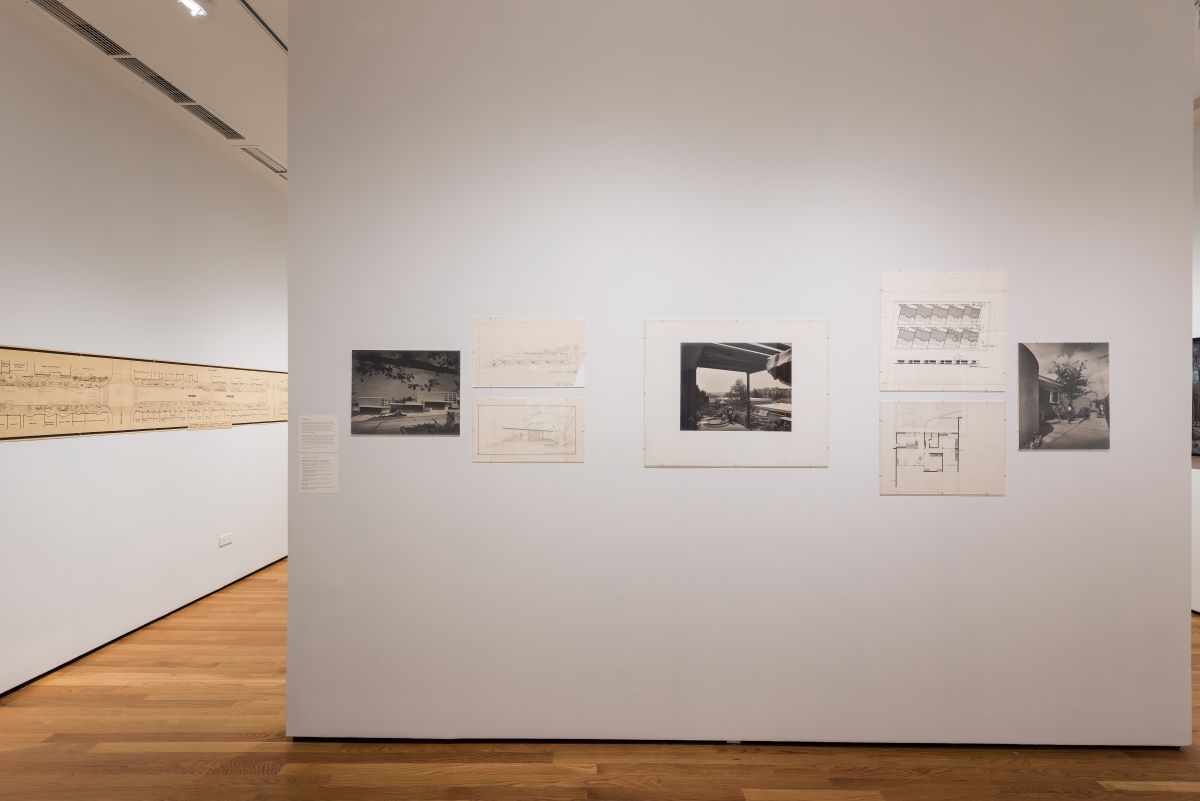
As a result of postwar shortages in housing, ten veteran families banded together to hire innovative architect Gregory Ain to design and build a cooperative housing development on a plot of land in the Silver Lake area of Los Angeles. This was an uncharacteristic approach to housing at the time, which favored individually owned properties. Still extant today, the Avenel Cooperative Housing Project consists of ten individual homes that are notable for their privacy and spaciousness. Avenel is organized in two rows of five homes and each has the same flexible floor plan that included sliding wall dividers. These dividers allowed owners to reconfigure the spaces as needed and create up to three bedrooms. Despite its modern popularity, the project was controversial in its time as its cooperative approach to community was deemed “communist.” Today, Ain’s design is celebrated for its effective use of limited space to create attractive, low-cost housing. —Morgan Owen (BA Art History &Global Studies 2019) Curatorial Intern.
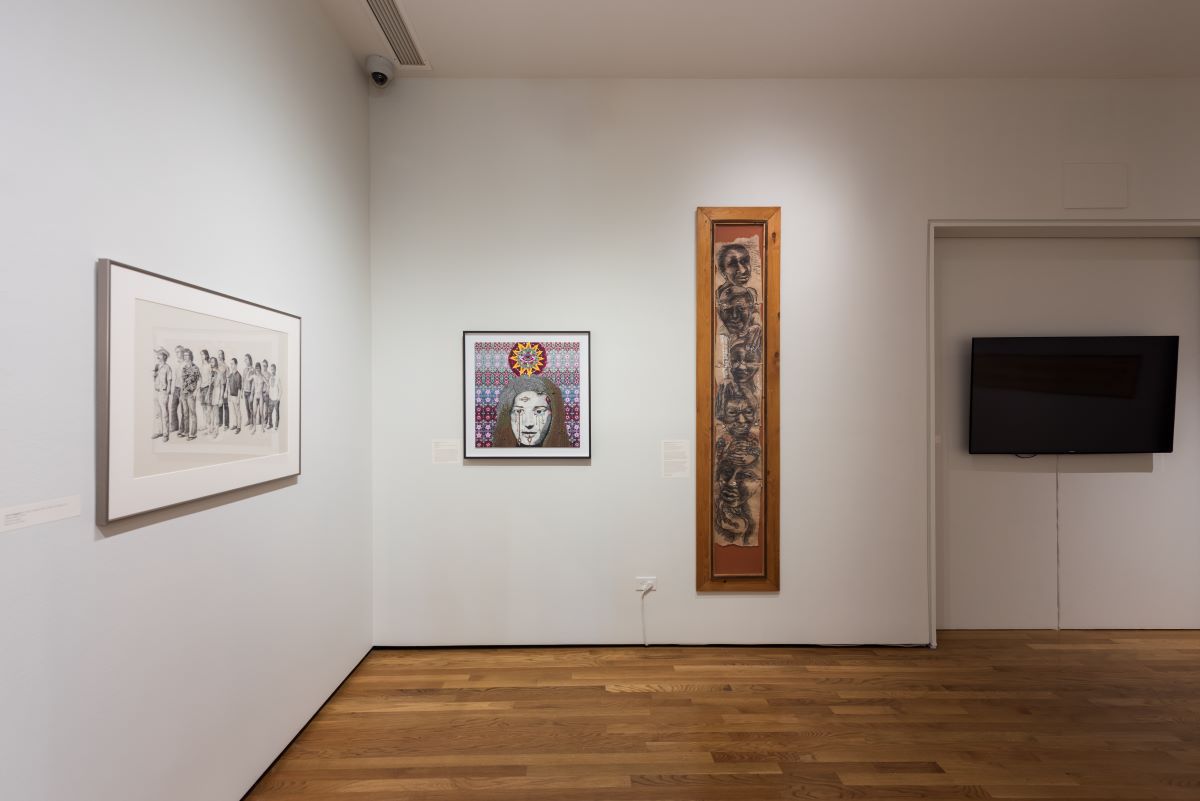
For several years, painter Asad Faulwellhas been depicting Algerian women who participated in the Battle of Algiers (1956-57). This urban guerrilla revolution relied on female combatants like Djamila Bouhired, pictured here, who carried out attacks against the colonial French population in the hopes of gaining independence for Algeria. This series of works evokes contradictory feelings in himself and viewers. As he states: “The women in the paintings killed people...They killed civilians in the name of freeing themselves from colonialism. They then went through hell themselves. They were tortured by the French soldiers. They were ostracized by their own countrymen. They are victims, aggressors, killers. My interest was in the moral ambiguity of the whole thing.”
Although academically trained, Brenda Lynn Robinson was most influenced by the well-known folk artists residing in the Black community of Columbus, OH. Most of her works were created in large series that serve as visual, historical chronicles of both enduring Black communities and those no longer in existence. During a trip to Africa, she was honored with the name Aminah and legally added it to her own. In 2004, Robinson was awarded a MacArthur Foundation Fellowship.
Each work in Robinson’s vast oeuvre is composed of unique, diverse media, from drawings to complex sculptures with found objects and “hogmawg,” her own mud-like bonding agent. Pages in History is composed of 2,000 separate works and focuses on her neighborhood in Poindexter Village. This work, Contributors: Columbus, OH is a “totem” depicting portraits of the Artist’s supporters. Drawn on her own handmade paper and sewn together with cowry shells she depicts, from the bottom up: Robinson’s father (LeRoy E.W. Robinson); Mrs. Ursel White Lewis (Art Patron); the Artist’s son (Sydney); folk artist Smokey Brown, and Robinson’s mother (Elizabeth Z. Robinson). —Bonnie G. Kelm Ph. D. Collector & Consultant
Gary’s most recent film developed out of an artist residency program in Giverny, France where Impressionist artist Claude Monet lived and worked in his gardens. Like her previous works, she employs direct animation techniques, including the application of flower petals and leaves onto the surface of the film stock. Gary’s filmopens with clips of the lush gardens and of the artist variously positioned in this landscape, as well as archival footage of Monet. As the film progresses these more sedate depictions are interspersed with 1960s era footage of Fred Hampton, the Chairman of the Chicago Chapter of the Black Panther Party and contemporary cell phone footage of the fatal police shooting of Philando Castro during a traffic stop in July 2016. Running throughout the film are off kilter depictions of the gardens showing the landscape at odds with typical vantage points. Giverny Iis both a guttural cry of anguish as well as Gary’s attempt to literally and figuratively reformulate viewers’ characteristic point of view. By doing so, Gary hopes to reveal the implicit structures of power (often white, western, and male) that typically shape our experiences of looking, living and even making art, as exemplified by Monet. As she states, “My videos and films are political, psychoanalytic, and personalized moments of liberation from the anonymous...and distorted histories through which Black life is often viewed.
Installation Images