ADC Student Conservation Team: Adhesive Removal Training
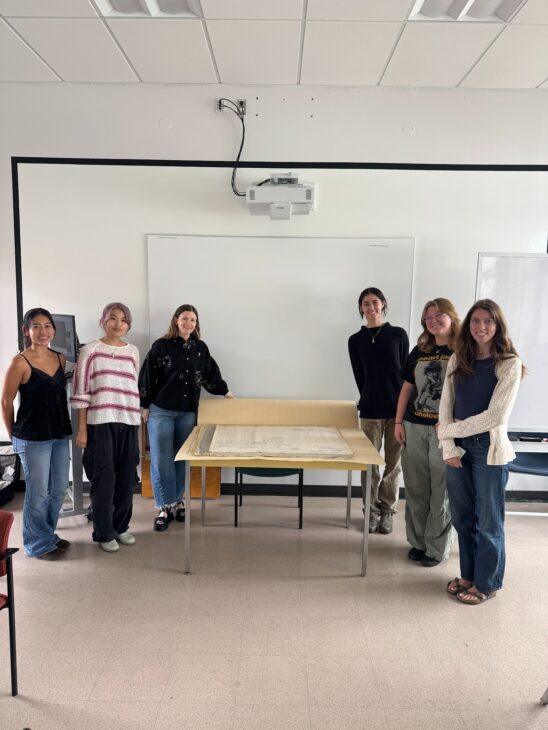
On May 8th, the Architecture and Design Collection (ADC) undergraduate conservation team was invited to a theory and hands-on workshop with professional paper conservator Madison Brockman from Los Angeles Art Conservation. The training provided an overview of adhesive removal techniques for paper materials and was organized by the ADC’s curator, Silvia Perea, and reference archivist, Marlene Moser. Silvia and Marlene oversee and supervise the conservation program, offering a valuable and rare opportunity for students to gain conservation experience before graduate school.
“Our undergraduate conservation assistants make an invaluable contribution to the preservation of the Architecture and Design Collection. What stands out most is their remarkable dedication. Many of them stay with us for years, committing hours each week to stabilizing fragile materials for long-term storage. We are incredibly proud to provide them with opportunities to train under a professional conservator, refining their practical skills and extending their knowledge of conservation techniques,” shared Marlene Moser, ADC Reference Archivist.
“As a way of recognizing their [the undergrad conservation team’s] efforts and also expanding their theoretical grounding in conservation, we are striving to organize specialized conservation workshops regularly. These go beyond general paper conservation and often focus on more specific technical challenges, such as adhesive and tape removal…allowing them not only to refine their skills but also to build a deeper understanding of the material and ethical dimensions of conservation practice, particularly as they encounter increasingly complex conditions within the items they care for,” offered Silvia Perea, ADC Curator.
Since starting last June, I have engaged with and conserved documents in various degrees of deterioration. Working through the unique challenges that each material provides with help from my team of peers and guidance from my supervisors has been thrilling, surreal, and indispensable to the development of this enriching skillset.
“Many of these materials arrive in a condition that is initially unsafe to handle or even expose, and it has been truly remarkable to witness their transformation—from fragile, unstable objects into works that can be safely handled and exhibited. Watching the papers quite literally change in the hands of our student team over time is one of the most meaningful and rewarding aspects of this work,” shared Silvia Perea.
During this Spring’s workshop, Madison Brockman offered the student team invaluable advice on advancement in the field of conservation as well as guidance on the immediate difficulties we engage with during our work, from general object handling to more specific skillsets, like the appropriate identification and treatment of adhesive materials from different periods. Madison provided insight on the distinct characteristics and behaviors of rubber-based tapes that were the standard in the first half of the 20th century and acrylic-based adhesives that are more commonly found on materials since the mid-century; now the conservation team is prepared to assess and respond to each instance head-on.
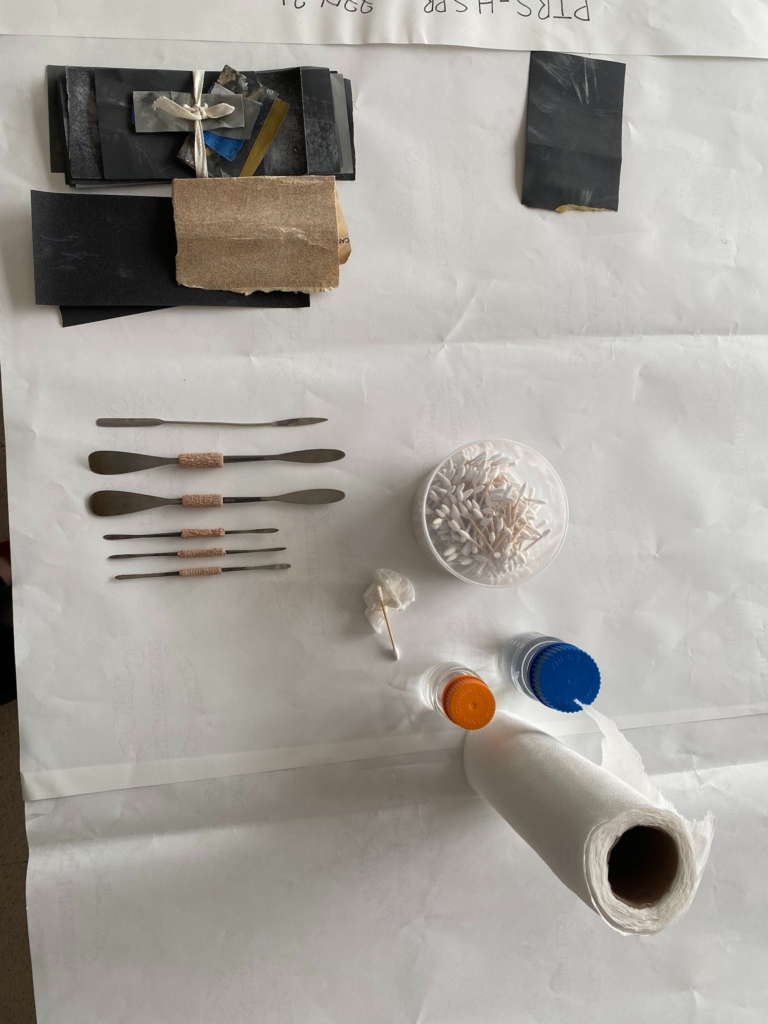
It is imperative to use the proper tools to ensure the safety and long-term stability of the documents being treated. We got to work with several tools that were new to us during this training, such as Casselli steel spatulas from Italy and an apparatus that conducts heat into them, allowing the tools to glide through adhesive with minimal friction applied to the archival materials.
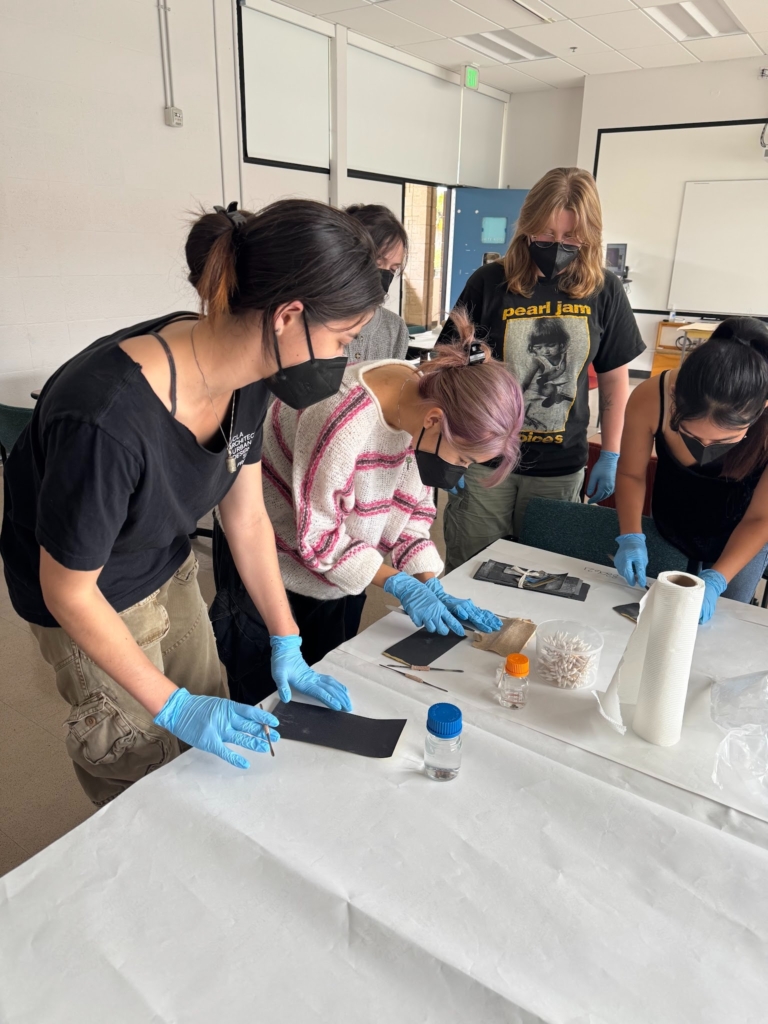
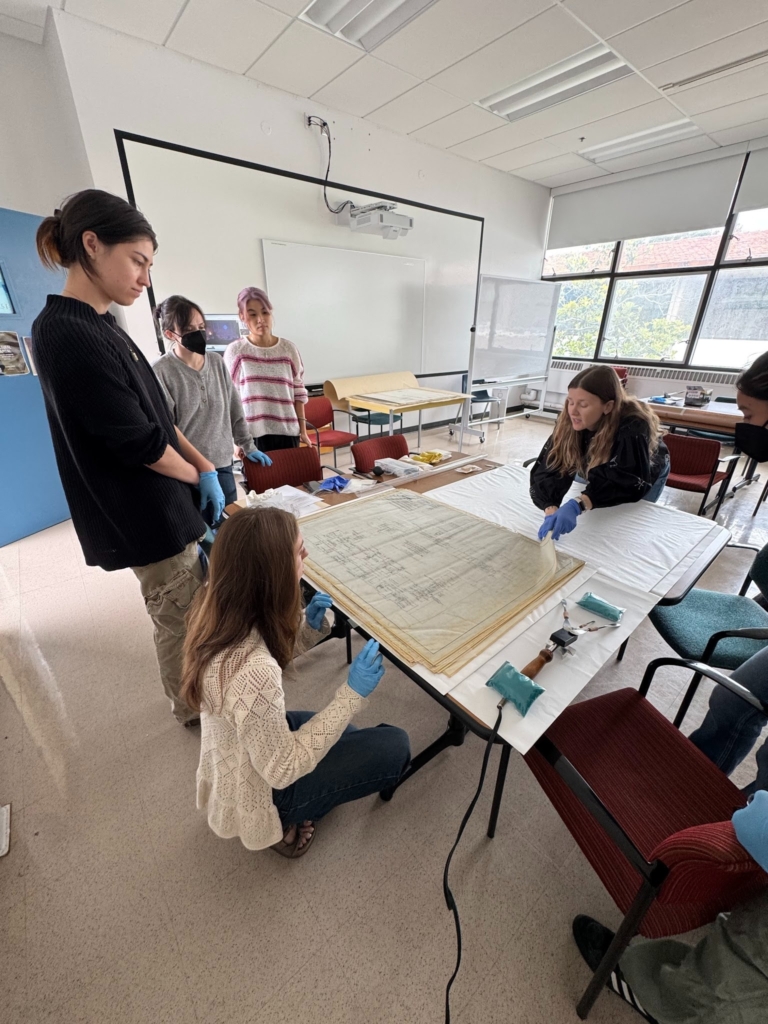
Before any hands-on work with documents, the conservation team received a demonstration on how to sharpen the ultra-thin spatulas and remove any steel particles that had been loosened during sanding. Just as important, the team received safety instructions to avoid complications from the heating instrument.
With the instructions out of the way, the hands-on training began! The documents being treated had become stuck together over time from the rubber-based adhesive oozing out of the tape, and essentially gluing a stack of plans to each other. Each student took turns working with the Casselli tools. After repeatedly heating them and implementing a gliding technique along the document’s perimeter until the uppermost sheet of paper was freed from the stack. Once complete, we were able to move the architectural plan to a prepped work station to start removing any remaining stickiness.
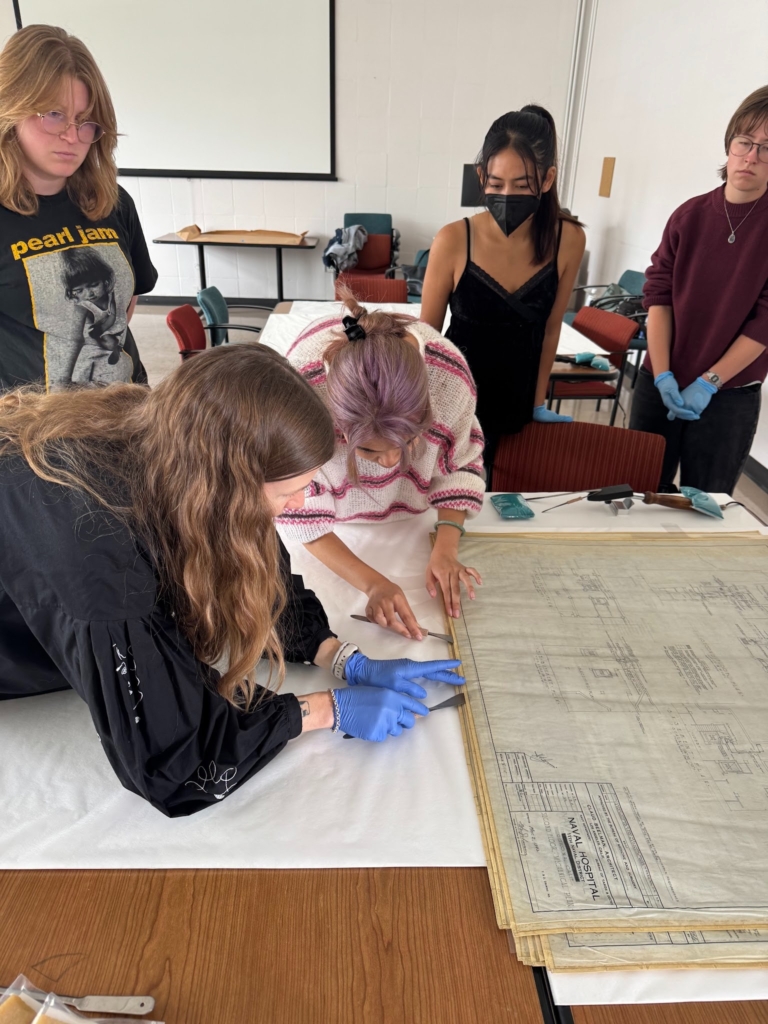
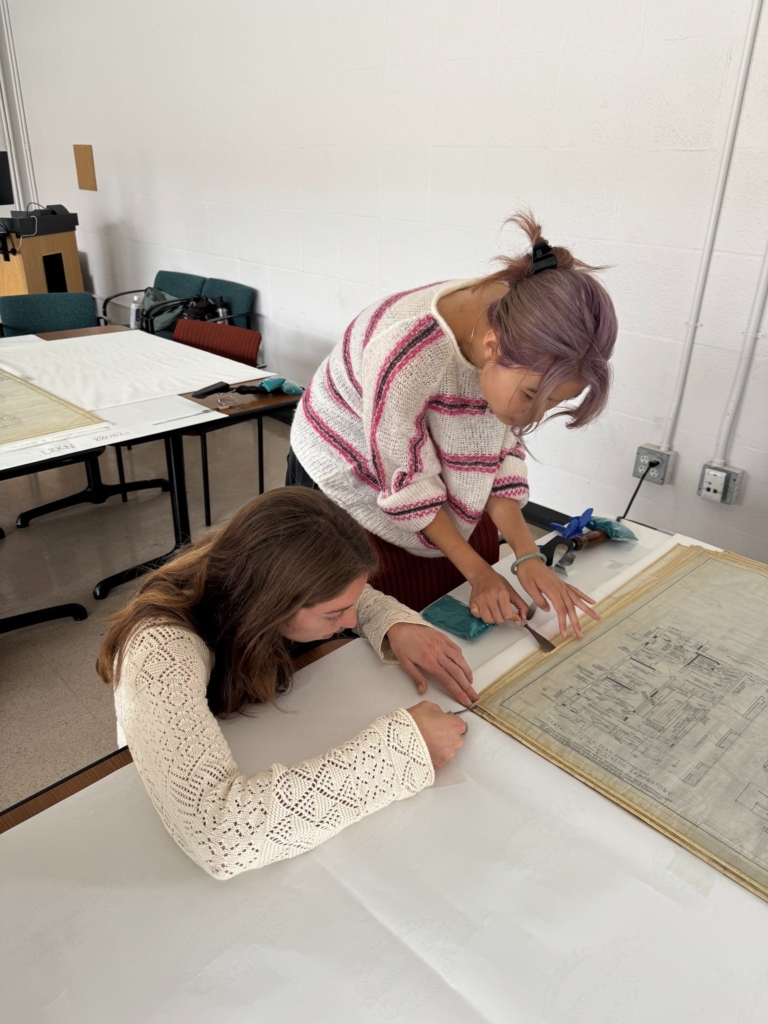
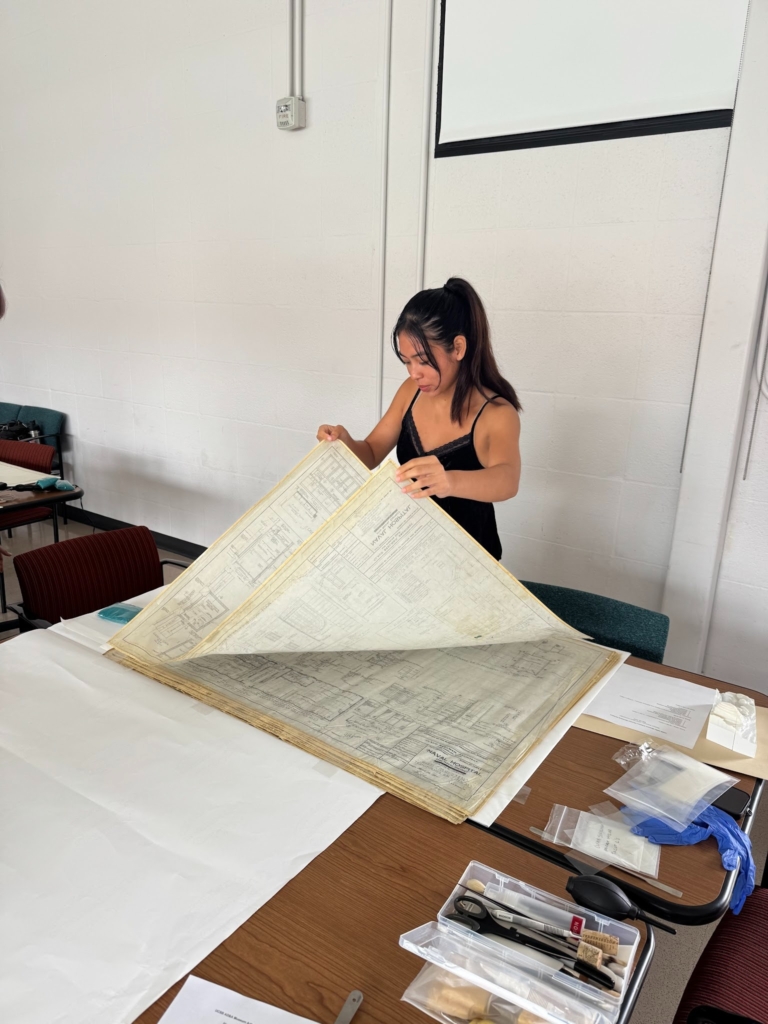
“Madison was very specific and informative, and her instructions gave insight into the immediate skills we were developing in the workshop as well as the conservation field as a whole. I appreciated her willingness to provide career advice and insight into our (the conservation team’s) futures in this field. The process of removing the adhesive was very satisfying, and it was exciting to execute a new conservation technique. I wasn’t expecting my internship to expose me to such valuable hands-on instruction, but Madison’s guidance was incredibly helpful,” shared Enya Larsen, graduating senior in the Environmental Studies and History of Art & Architecture departments. Spring 2026 is her first quarter working on the conservation team.
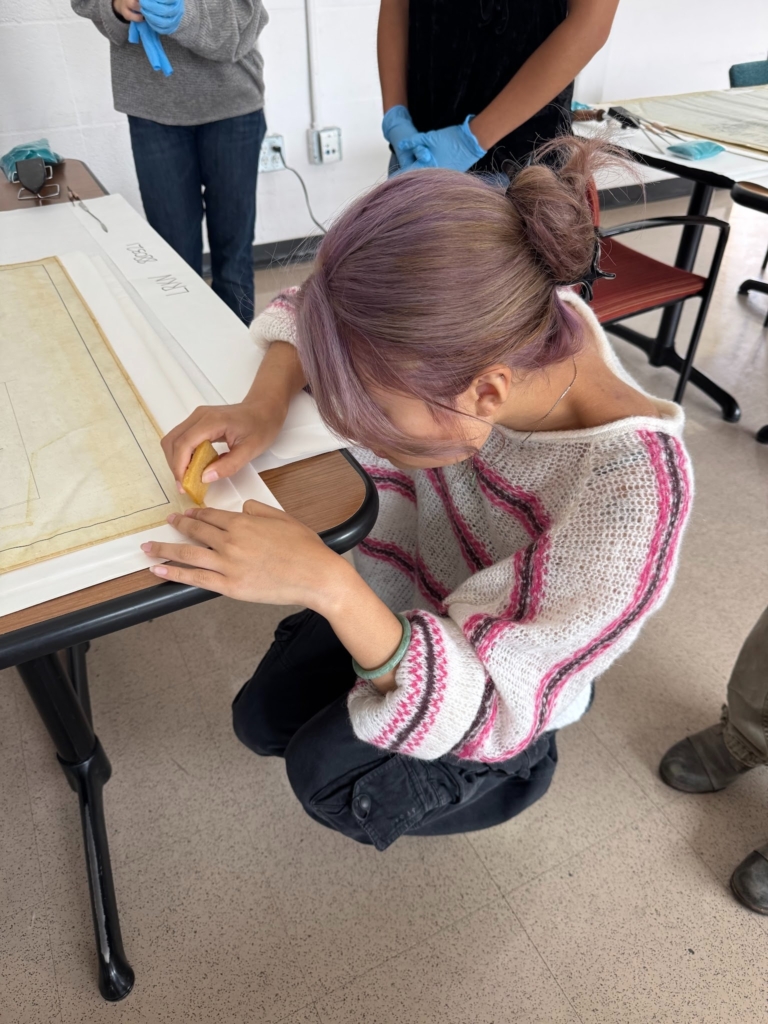
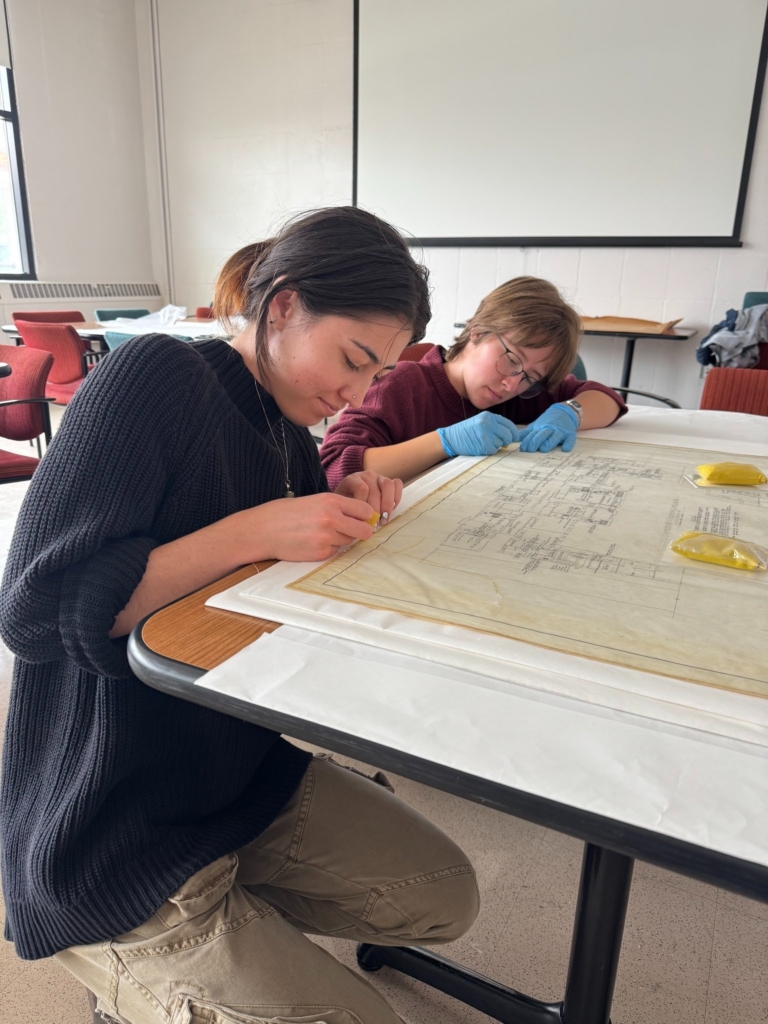
“After working in the conservation tent for 2 years and having been initially trained with materials provided by Madison and Los Angeles Art Conservation, it was an amazing experience to meet her in person and get her insight firsthand. It was a very informative experience to learn the glue removal process from a paper conservator who was able to explain both the practical and chemical processes of this work,” shared Megan Nghi Leverett, graduating senior in the Philosophy and History of Art & Architecture departments. She is the most senior member of the student conservation team, with 2 years of experience working with ADC materials in conservation and archival roles.
Once the documents were safely separated from one another, we started the process of removing the gunky adhesive that had spread from under the tape. In doing so, we minimized the likelihood of these documents sticking together again, allowing them to be properly cataloged, stored, and studied by researchers upon request. This process, like most steps in the conservation process, requires careful and repetitive movements and diligent attention to detail.
If you are a UCSB student with an interest in conservation, reach out to Silvia Perea for more information: silviaperea@ucsb.edu